
When I was researching Amos Alonzo Stagg and Stagg Field, I realized that, while Stagg is famous for football, but he was a huge presence for track and field too, especially promoting the Olympics movement. He also respected talent. Henry Binga Dismond (1891-1956) was one of his track stars in 1915-1917, a Black man competing at the highest level of the sport at a time when that was extraordinarily difficult.
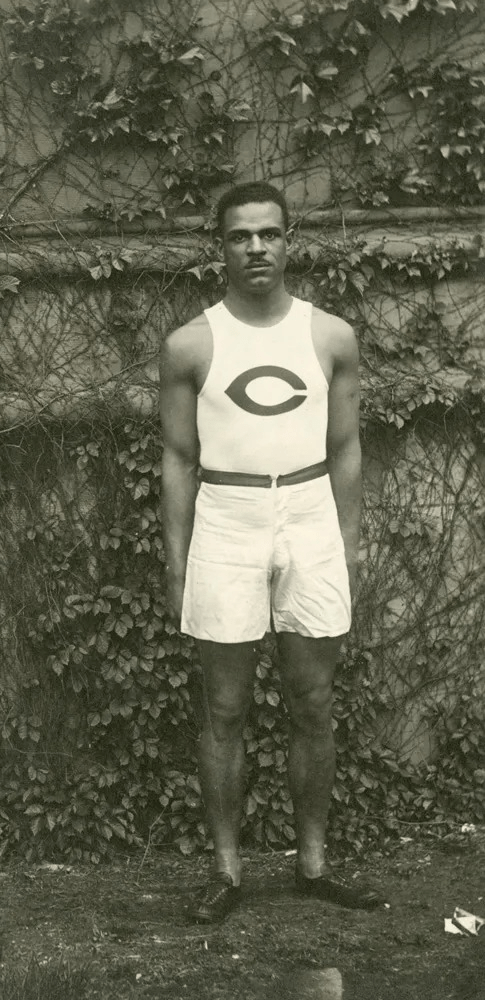
There isn’t much about him that I’ve found yet. Luckily there is a biographical article in the Journal of the National Medical Association. Dismond, who used Binga rather than Henry, was born in Virginia. His father was Samuel H. Dismond, a doctor. His parents both died when Binga was five. He was raised by his grandparents. Binga Dismond graduated with a B.A. from Howard University in 1912. His mother’s brother, Jesse Binga was at that time a banker in Chicago. With Jesse’s encouragement, Henry enrolled in the University of Chicago, in the medical program, earning a B.S. in 1917.
All three years he was at the university, he was on the track team. He set the world record in the 440-yard dash in 1916. He was set to compete in the Olympics in Berlin 1916, but those were cancelled because of World War I. Dismond was Big Ten champ in the quarter mile sprint for all three years, setting a record that lasted for 23 years. As photos in the University of Chicago archive testify, he was part of championship relay teams all three years. The 1915 half-mile relay team set a world record. The 1917 relay teams set conference records. There were enough Black students at the University of Chicago at the time that there was a chapter of Alpha Phi Alpha fraternity, which he joined.
One of the things that struck me about the photos is that by 1917, Dismond is in the center of all the photos. I hope that signified something positive in Dismond’s experience. It had to have been intense.

In 1917, Henry Dismond enlisted with the famous 370th Infantry, the 8th Division, the all-black Chicago unit, as a second lieutenant. He fought in France with distinction, getting promoted to first lieutenant.
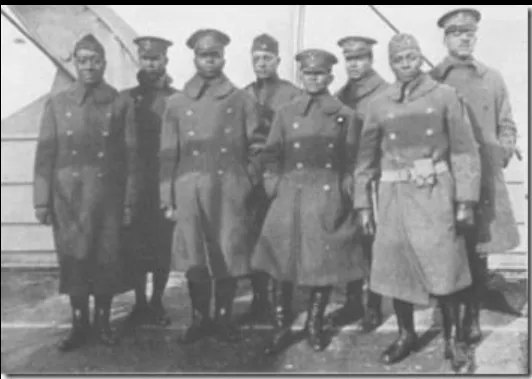
He came back to Chicago to get his M.D. from Rush and to intern at Provident Hospital, where he invented a respiratory treatment device. He specialized in the cutting edge of rehabilitative medicine, including x-rays and electrotherapy. He moved to New York City in 1924, where he had a distinguished career in Harlem. He tried his hand at poetry, perhaps because he was apparently friends with and apparently the doctor for Langston Hughes. He was famous enough in 1949 to get a gossipy mention in Ebony magazine, as though the readership was sure to know who he was.
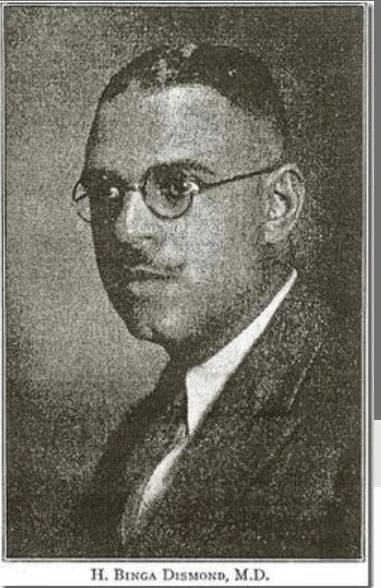
Dismond felt a deep connection with Haiti. When there was horrendous violence against thousands of Haitians in the Dominican Republic in 1937, he organized aid, earning a medal from the Haitian government.
 Patricia L. Morse